The Department of Interior Design is dedicated to nurturing creative minds in the art and science of designing functional and aesthetically appealing interior spaces. With a focus on innovation, sustainability, and user-centric design, the department equips students with practical skills, theoretical knowledge, and industry exposure. It fosters creativity, spatial awareness, and technical proficiency, preparing students for successful careers in residential, commercial, and institutional interior design.
A B.Design degree opens diverse and rewarding career opportunities across creative industries. Graduates can pursue roles such as:
1.Interior Designer – Designing functional and aesthetic spaces for homes, offices,
and public buildings.
2. Graphic Designer – Creating visual content for branding, advertising, and digital
media.
3. Fashion Designer – Designing clothing and accessories for fashion houses,
retailers, or personal labels.
4. UI/UX Designer – Designing user interfaces and experiences for websites, apps,
and software.
5. Product Designer – Developing innovative and user-friendly products, from
electronics to furniture.
6. Textile Designer – Designing patterns and fabrics for fashion and interior use.
7. Design Consultant – Providing creative solutions for businesses and clients on a
freelance or contractual basis.
8. Exhibition/Set Designer – Designing sets for film, theatre, or exhibitions.
9. Entrepreneur – Launching one’s own brand or design studio.
Interior Design is a constantly evolving and ever-changing field that requires a combination of many traits. Over the last decade, the popularity of interior design as a profession has increased manifold. It would not be wrong to say that in the coming times, the built-up environment and infrastructure will shape economies and societies, making designers the harbingers. The student of Interior Design is in the process of acquiring the vocabulary, just as a child learns to talk, then to write. Therefore, it becomes imperative for the institutes to envisage and evaluate the needs of these budding designers, to instil in them creativity, innovation and analytical qualities which would eventually equip them to efficiently transform their vision and imagination to physical existence on the earth. As educators, we constantly strive to produce industry ready professionals who are complex problem solvers with their rationality and technical know-how.
| S. No. | Program | Eligibility |
|---|---|---|
| 1. | BCA(Bachelor of Computer Applicatons) | 10+2 or Equivalent in any Stream with at least 40% marks in aggregate from Recognized Board |
| 2. | B.Voc(Software Development) | 10+2 or Equivalent in any Stream with at least 40% marks in aggregate from Recognized Board |
TThe B.Design program under GNDU is structured to provide a balance between theoretical knowledge and practical skills, nurturing creative thinking, problem-solving abilities, and professional competence. The key features of the learning process and methodology include:
Studio-Based Learning
o Core design subjects are taught in studios where students actively work on projects
and assignments.
obFocus is on hands-on learning, model-making, material exploration, and concept
development.
Project-Based Approach
Each osemester includes design projects that simulate real-world scenarios.
o Students are encouraged to work on live projects, case studies, and design
competitions.
Interdisciplinary Curriculum
o Integration of various subjects such as interior design, furniture design, graphic
design, architecture, and digital media.
o Students learn technical drawing, CAD, 3D visualization, model making, and design
software.
Workshops and Expert Lectures
o Regular workshops on crafts, materials, digital tools, and rendering techniques.
oGuest lectures and sessions by industry professionals and alumni.
Internships and Industry Exposure
o Students undergo mandatory internships to gain hands-on industry experience.
o Site visits, market surveys, and exhibitions enhance practical understanding.
Portfolio Development
o Continuous emphasis on building a professional design portfolio.
o Presentation skills and visual storytelling are integrated into the curriculum.
Critique and Jury System
o Regular reviews and critiques by faculty and external jurors.
o
Constructive feedback to help students improve and refine their work.
Research and Innovation
o Encouragement of design research, trend analysis, and sustainable practices.
o Final year involves a major design thesis or capstone project based on individual
interests.
Final year involves a major design thesis or capstone project based on individual interests.
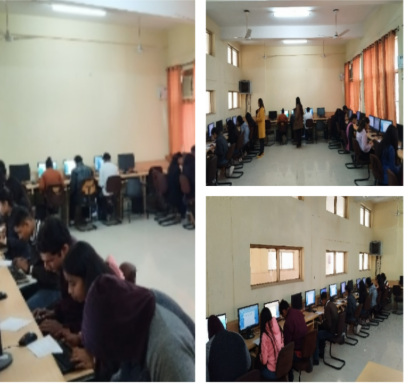
Well-equipped computer laboratories enhance the learning process and enable the proper conduct of the University prescribed courses. Branded Personal Computers are installed in Computer Labs, all networked to facilitate teaching in small batches, with adequate faculty attention.
CTIHS is one of the best Institute in Jalandhar,Punjab offering graduation degrees in various field.
Shahpur,PO-Udopur,Near Lambra,Jalandhar-144020,Punjab,INDIA.
Helpline No.:-
1800-137-2227
Student Helpline No.:-
+91-181-5055127
+91-181-5055128
+91-181-2995967